On Monday, news broke that EA, one of the world's largest publicly-traded game publishers, is being funded by a group of investors including Jared Kushner's Affinity Partners private equity firm and Saudi Arabia's Public Investment Fund.
If the deal earns shareholder and regulator approval, it'll be the largest leveraged buyout in history—and in fans and EA developers alike.
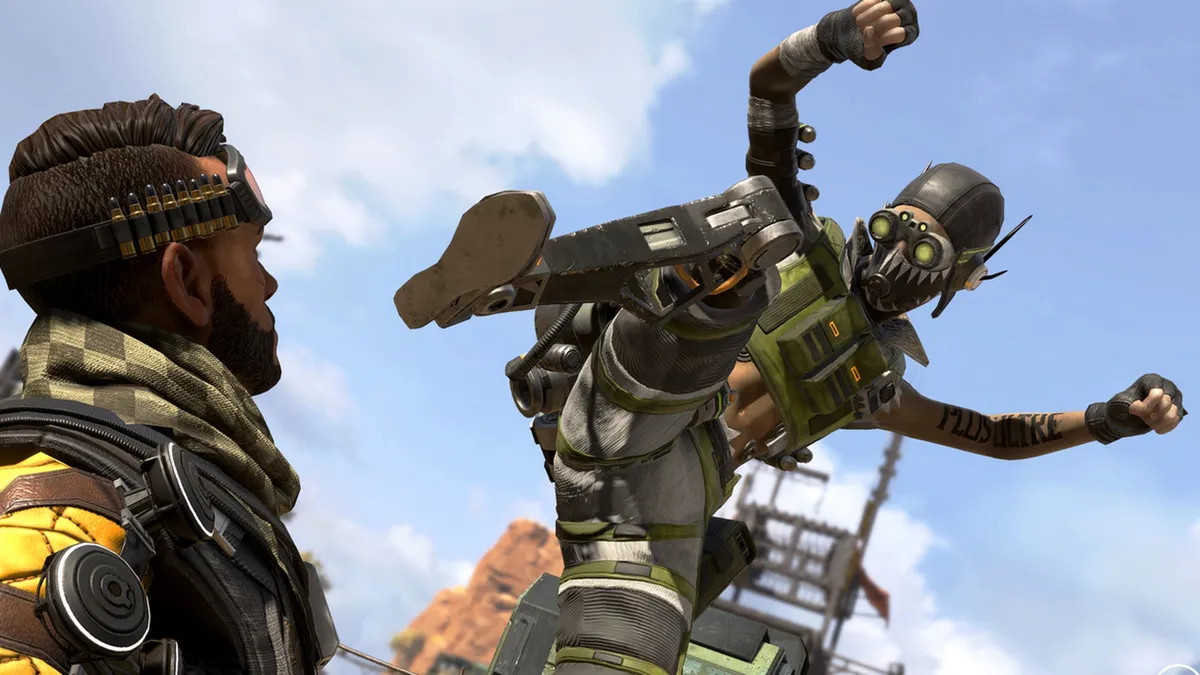
To understand why the buyout news seems dire to so many, we first need to understand private equity and what exactly a leveraged buyout entails. The PIF, meanwhile, is its own troubling wildcard.
Since 1990, EA has been a public company: Like other publicly traded businesses, its ownership—or equity—has been determined by the distribution of shares of capital stock that are bought and sold through stock exchanges. Being a publicly traded company offers advantages, the most obvious being the ability to raise funds by selling shares of stock.
But public companies have their disadvantages, too—particularly for consumers in creative and entertainment industries. Shareholder primacy, the theory that delivering value to shareholders should be the singular principle guiding corporate strategy, is the era's prevailing economic philosophy.

That relentless pursuit of profit maximization, however, often prioritizes short-term returns over quality, creative output, and worker security, manifesting in videogames as risk-averse release strategy, predatory , and and studio closures—all of which have marked EA's controversial history.
While EA won't be subject to the whims of the stock market, private equity ownership presents its own pitfalls.
It's understandable how the news that EA will be transitioning to private ownership u31.com เข้าสู่ระบบ could have an appeal. But while EA won't be subject to the whims of the stock market, private equity ownership presents its own pitfalls.
"At the most basic level, a private equity firm is an investment management firm that raises money from different sources and uses the combined capital to buy companies," senior investing editor Karee Venema told PC Gamer. "Most of the time, they buy privately held companies. But sometimes, as is the case with Electronic Arts, they purchase public companies and take them private."

Typically, Venema said, private equity firms buy or take a stake in "established" companies with "strong long-term growth potential, but have areas that can be improved to create value for the investors." In EA's case, she said "some Wall Street analysts identify mobile revenue as an area where the company has room to grow."
Applying leverage
Ostensibly, the goal of a private equity acquisition is to optimize the bought-out company's performance for long-term returns, tapping underutilized potential—like EA's mobile business—to increase profits. But private equity firms have gained a sinister reputation thanks to a counter-intuitive strategy in which firms can cannibalize their own acquisitions, extracting profits at the expense of the company and its workforce.
That grisly process begins with the leveraged buyout, the most common form of private equity acquisition.
"A leveraged buyout just means the company is bought using a combination of borrowed money, or debt, and private equity," Venema said. "The purchased company's balance sheet is used as collateral against the loans taken out to purchase it."

In other words, the "leverage" in the leveraged buyout is debt—and crucially, the collateral for that debt is the assets of the acquired company, not of the private equity firm itself. The investors are able to limit how much capital they have to supply for the buyout, while limiting their financial risk if the loan—in EA's case, a $20 billion loan from JP Morgan—proves insurmountable.
Reading that might produce a faint, dissonant tingle in the back of your mind. You might be wondering, "If private equity firms can take out loans that only their companies are responsible for, could they bleed more money out of a valuable company than they paid and avoid any consequences when that company goes bankrupt?"
And you'd be right to wonder, because that's exactly what some private equity firms do.

If you're not terribly concerned about a company's long-term survival, there are myriad ways to drain it of as much value as possible. As wrote last year, private equity firms have hollowed out company workforces and raised prices to pull in unsustainable profits, aiming to cut loose before declining product quality tanks sales. Others have liquidated company assets, enriching investors with the sale of real estate, subsidiaries, and intellectual property.
If you're not terribly concerned about a company's long-term survival, there are myriad ways to drain it of as much value as possible.
Sometimes, those sold assets will end up driving the company further into debt through "sale-leaseback agreements," where the firm will arrange for the company to sell its real estate properties, pocketing the profits while the company is forced to pay rent for the use of its own business space. Meanwhile, the firm is : standard 2-and-20 terms see firms taking an annual 2% of a managed company's assets and 20% carried interest on all profits above a certain margin, while the company might face additional monitoring fees, transaction fees, and more.
Private equity has maimed . It has like the Gizmodo Media Group and across the US. It's and . A found that in 2024, private equity-backed companies accounted for more than 10% of all corporate bankruptcies and over 50% of bankruptcies with over $500 million in liabilities—but "despite their role in precipitating bankruptcies, private equity firms often emerge financially unscathed."

"There have certainly been instances of this—the is top of mind for me," Venema said. "But there have been successful private equity buyouts, too."
Hilton, for example, in 2018 when Blackstone sold its remaining stake from its 2007 LBO—sometimes called "the best LBO ever" in financial circles. And Dell, Venema said, went from a $25 billion buyout in 2013 u31 ทางเข้า to being valued today at nearly $100 billion after going u31 เข้าสู่ระบบ public again in 2018.
The PIF problem
Investors and analysts, however, seem largely unconcerned about EA suffering the potential deathtouch of private equity, in part because of the investment from Saudi Arabia's Public Investment Fund, which won't necessarily be following the same playbook as the private equity firms joining it in the buyout.

"Wall Street seems generally upbeat about the EA buyout, expecting PIF to draw from its vast resources and drive meaningful value from the transaction," Venema said.
The PIF, which already held a 9.9% equity stake in EA, was formed in 1971 to diversify Saudi Arabia's economic interests through international investment. In recent years, PIF investments have flooded billions into takeovers, , , and sizable ownership stakes in videogame companies like Take-Two, Nexon, Capcom, Nintendo, and more—efforts that have been criticized as attempts to launder the country's infamous record of human rights violations as it seeks to lessen its reliance on oil.
Saudi Arabia's crown prince, prime minister, and de facto ruler Mohammed bin Salman, who the assassination and dismemberment of Washington Post journalist Jamal Khashoggi, also serves as the PIF's chairman. In 2024, found that, under bin Salman, there had been "no significant changes in the human rights situation in Saudi Arabia," characterized by credible reports of extrajudicial killings, arbitrary arrests, torture, press censorship, and restrictions on freedom of expression.
We've been given proof that Saudi money is conditional.
We've already seen Saudi videogame investment land the royal family's favorite and send Assassin's Creed on . The news of the PIF's involvement in the EA buyout has sparked concern that Saudi ownership will leave EA games like The Sims, which fans have made a haven for representation and diversity, subject to a regime with a .
This month, we've been given proof that Saudi money is conditional. Prominent comedians like Dave Chappelle, Bill Burr, and Aziz Ansari have by accepting outsized payments to attend a Saudi Arabian comedy festival in Riyadh. One comedian, Tim Dillon, was after rationalizing his decision to attend with a joke that acknowledged Saudi Arabia's .
In a , bin Salman waved away the accusations of "sportswashing," saying "If sportswashing going to increase my GDP by way of one percent, then I will continue doing sportwashing. I don't care."
In an email to employees earlier this week, EA CEO Andrew Wilson said the company's "values and our commitment to players and fans around the world remain unchanged."
SlotWizard4655
Customer support has been outstanding whenever I had any issues. They respond quickly and professionally, ensuring that any concerns with deposits, withdrawals, or gameplay are addressed immediately, which makes me trust the platform more. Sometimes I wish there were more ways to earn rewards through loyalty programs or frequent player bonuses. Adding seasonal events or special challenges could enhance the excitement even further. The variety of games is excellent, including table games like blackjack, roulette, and baccarat, in addition to slots. This keeps the platform interesting and allows me to switch games depending on my mood.
HighRoller3339
I really enjoy playing the slot games here. The variety is amazing, from classic reels to modern video slots with interactive bonus rounds. Every spin feels like an adventure, and the graphics and sound effects are top-notch, making the experience immersive and exciting. I appreciate the themed slot games, especially those based on movies and TV shows. They make the gaming experience more engaging and immersive. The combination of storyline, visuals, and bonus features makes each game feel unique.
CasinoKing5608
The progressive jackpots are thrilling, and it's exciting to watch the jackpot amounts grow as more players spin the reels. I hope they add even more jackpot slots because it adds a lot of excitement to the gameplay. Sometimes I wish there were more ways to earn rewards through loyalty programs or frequent player bonuses. Adding seasonal events or special challenges could enhance the excitement even further. I really enjoy playing the slot games here. The variety is amazing, from classic reels to modern video slots with interactive bonus rounds. Every spin feels like an adventure, and the graphics and sound effects are top-notch, making the experience immersive and exciting.